Robotics Labs at UW
Bio-integrated Robotics Lab
This group led by Yunus Alapan works at the interface of robotics, microtechnology and bioengineering, developing soft micro-robots inspired by nature for healthcare applications. The overarching theme of their research is bionic cellular and tissue robots for size-matched and spatiotemporally resolved physical and biochemical manipulation of cells and tissues.

Connected & Autonomous Transportation Systems (CATS) Lab
The CATS Lab led by Dr. Xiaopeng (Shaw) Li houses two full scale connected autonomous vehicles. Their research aims to establish a set of methodologies to understand, predict and eventually improve smart city systems via sensors, controllers and design variables rendered by emerging technology.
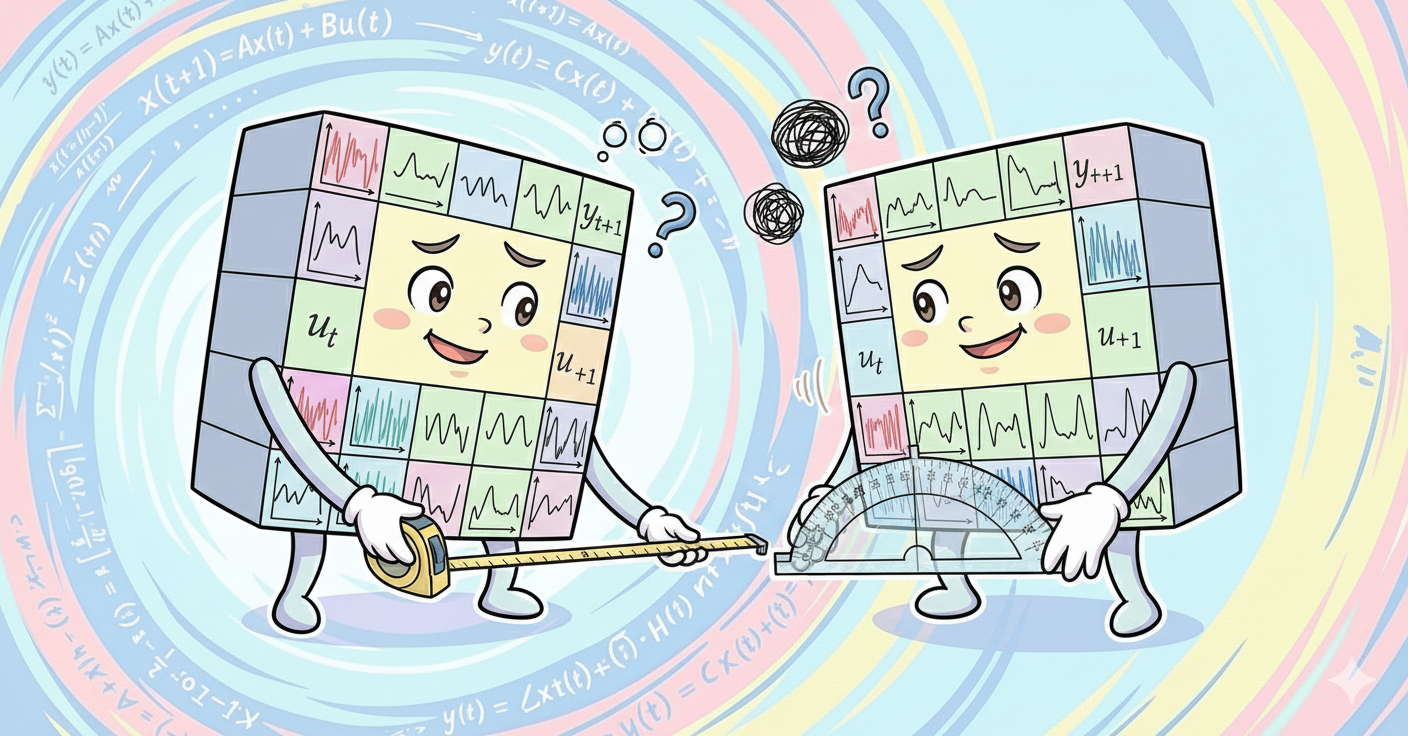
Coulson Group
Assistant Professor Jeremy Coulson works on Data-Enabled Predictive Control (DeePC), Robust Data-Driven Control, and Adaptive Data-Driven Control.
Digital and Robotic Construction (DARC)
Led by Zhenhua Zhu, DARC is interested in building civil infrastructure (buildings, bridges, highways, etc.) more effectively and efficiently. Advances in information technology and robotics will greatly speed up construction progress, improve quality and safety, and lower cost. Our attentions are placed on fitting those advances to the builders’ needs in reality and devising innovative methods to facilitate project delivery from early planning to the construction phase and beyond.
Ergonomics and Computational Human Operations (ECHO) Lab
The goal of ECHO lab led by Jackie Cha is to improve the lives of professionals by leveraging novel technologies to enhance their performance; therefore, their interactions with others and society. Within the human factors and ergonomics discipline, they aim to measure data from humans to develop models to assess skills and implement interventions to improve teams’ performance, particularly in healthcare environments.
Flexible Electronics and Additive Printing (FEAP) Lab
The FEAP lab led by Hantang Qin specializes in research areas including micro/nano scale fabrication, novel additive manufacturing processes, rapid prototyping methods and tools, and manufacturing systems based on inkjet printing and laser ablation for flexible electronics and optoelectronics. The research includes but not limited to scaffolds fabrication for biomedical applications, laser ablation, real-time monitoring and automation, CAD/CAM systems, 3D printing, topography optimization, multi-material and multi-scale fabrication based on additive printing.
Human Factors and Machine Learning Lab
Led by Tony McDonald, the lab is focused on finding innovative ways to join machine learning and big data analytics methods with models of human behavior to improve the human experience. They design algorithms and processes to help solve major safety issues, and use the structure of those algorithms to validate and extend knowledge of human behavior.
Lab for Manufacturing Process Analysis and Control (M-PAC)
Led by Shiyu Zhou, M-PAC focused on interdisciplinary research on new methodologies of data analysis, knowledge discovery, and control of manufacturing processes for quality and productivity improvement.
Marine Robotics Lab (MRL)
The Marine Robotics Lab (MRL) led by Wei Wang advances the design and control of aquatic robots that operate safely and efficiently in complex, real-world environments. Our ambition is to deliver reliable, explainable, and coordinated autonomy for AI-enabled robots to support scientific discovery, infrastructure resilience, and environmental stewardship.

People and Robots Laboratory
Led by Bilge Mutlu, this lab’s research builds human-centered principles and methods to enable effective and intuitive interactions between people and robotic technologies and facilitate the successful integration of these technologies into human environments.
Pikul Research Group
A unifying goal of James Pikul’s research group is to enable powering the intelligence economy with solutions for robots, data centers, and disconnected grids.
Prediction and Action Lab (PAL)
Led by Josiah Hanna, the goal of PAL’s research is to create intelligent agents—robots and software systems—that learn to make decisions on their own—improving through experience rather than following fixed logic. Toward this goal, their work primarily focuses on reinforcement learning (RL) and spans algorithm design and applications, particularly in robotics.
REACH Laboratory
The Robotics Engineering, Applied Control, and Haptics (REACH) lab, led by Mike Zinn, focuses on the investigation of a wide range of human-centered robotics topics. The REACH lab focuses on understanding and overcoming the design and control challenges of complex electro-mechanical systems with a primary focus on physical human-robot interaction and human-centered robotics more broadly. Current application areas include advanced haptic interfaces, medical and rehabilitation robotics, and manufacturing.

Robot Teaching and Teaming Laboratory (RT2)
The RT2 lab is a group of researchers (from Computer Science and Engineering backgrounds) led by Mike Hagenow designing new approaches for robot teaching and teaming. Our mission is to develop human-centered robot technologies that elevate human work.
Sky-Lab
The Sky Lab led by Sikai (Sky) Chen’s research centers around three major themes: human users, AI, and transportation. We aim to innovate and develop safe, efficient, resilient, and human-centered transportation systems using cutting-edge methods and technologies. Our focus is on incorporating human behaviors, interactive autonomy, digital infrastructure, and domain-specific AI.
The NeuroErgonomics Lab
Led by Ranjana Mehta the lab examines the mind-motor-machine nexus to understand, quantify, and predict human states like stress and fatigue. With these predictions, we can better understand human performance while interacting with emerging technologies in safety-critical environments (emergency response, space exploration, and oil and gas).

The Precision Mechatronics and Control Laboratory (PMCL)
Led by Lei Zhou focuses on developing novel and high-performance mechatronic solutions through exploiting the synergy between machine design, electric machines and drives, and control algorithms, thereby broadly impact applications such as manufacturing and robotic systems.

The Simulation-Based Engineering Lab (SBEL)
Led by Dan Negrut and Radu Serban, the lab investigates modeling approaches and develops software solutions that enable fast computers to accurately predict how complex mechanical systems change in time. Example applications: vehicles operating on soft deformable terrain, ensembles of millions of elements in the flow of granular material, the VIPER rover operating on the Moon.

UW Autonomous & Resilient Controls Laboratory (ARC Lab)
Led by Xiangru Xu, the ARC Lab focuses on developing principled analysis and control methodologies to enable safe and trustworthy autonomous intelligent systems. The lab’s current research thrusts include verification and control of machine learning-enabled systems; safety filter design; optimization-based motion planning; and certifiable perception-based control.
UW BADGER Lab
The Biomechatronics, Assistive Devices, Gait Engineering and Rehabilitation Laboratory at the UW–Madison (UW BADGER Lab) led by Peter Adamczyk applies scientific and engineering principles to promote quantitative assessment, restored function, and physical recovery after orthopedic or neurological injury. Our lab’s goal is to apply mechanical engineering principles to rehabilitation in order to improve lower limb mobility impairments.
Wisconsin AI and Vision Lab (WAIV)
Led by Yong Jae Lee, the WAIV lab research in computer vision and machine learning aims to develop intelligent systems capable of understanding our multimodal world, enabling them to serve as valuable and effective assistants to humans. Their work has particularly focused on designing novel algorithms that require minimal human supervision.
WISION
Wisconsin Computational Imaging And Vision Lab
The goal of WISION Lab led by Mohit Gupta is to develop the next generation of computer vision systems. Our research is in two main areas: Designing novel computational cameras, and developing physics- and learning-based algorithms for scene interpretation. Our work is motivated by applications in robotics, consumer and scientific imaging, and human-computer interfaces.